1.25 Button Pin Sublimation Template
A Designer’s First Look: Clean, Compact, and Ready for Real Stitching
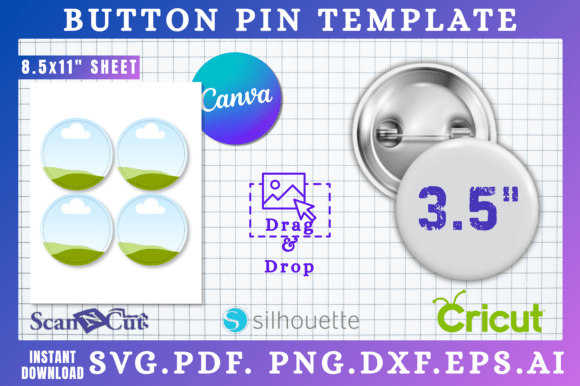
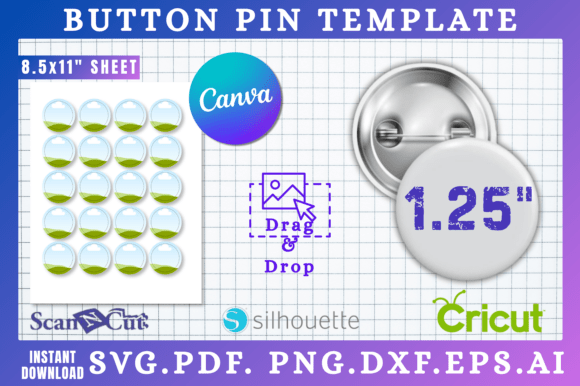
When I opened the 1.25 Button Pin Sublimation Template, my first thought wasn’t “cute” or “trendy”—it was “practical.” This isn’t a busy, over-layered graphic. It’s a precisely scaled, centered circle—1.25 inches in diameter—designed to sit cleanly on an 8.5 x 11 sheet. As someone who regularly preps embroidery files for client projects like custom tote bags, baby onesies, and boutique aprons, I appreciate that it doesn’t waste space or force awkward cropping. The shape alone tells me it’s meant for versatility: pins, patches, iron-ons, sublimated coasters, or even as a focal point inside an embroidered hoop art piece.
Where It Shines: Real Projects, Not Just Mockups
I tested the 1.25 Button Pin Sublimation Template as the centerpiece of a small-batch holiday project: embroidered linen tea towels for a local craft fair. I used it as a clean frame around a simple hand-lettered phrase (“Warm Hands, Full Heart”) stitched in satin stitch. Because the template’s outer edge is crisp and consistent—not pixelated or feathered—it translated beautifully into a tight, stable satin border. No thread nesting, no skipped stitches. That same clarity held up on a lightweight cotton baby onesie (with tear-away stabilizer) and on a structured twill cap front (using cutaway + topping). It’s especially effective when you need a polished, branded accent—say, a small logo on the chest of a sweatshirt or the corner of a pillow cover. For Etsy sellers listing personalized gifts, this template gives consistency across listings: one cohesive size, one reliable shape, zero guesswork about fit.
Fabric & Function: Know When to Pause and Plan
That said, don’t assume it’s foolproof on every surface. On highly textured fabrics—like bouclé knit or thick terry cloth—the outer edge can blur slightly unless you adjust stitch density manually or add a light topping. On thin or stretchy fabric (think rayon challis or lightweight jersey), the design needs extra stabilization—ideally a medium-weight cutaway plus a light spray adhesive—to prevent puckering around the circle’s perimeter. And if you’re stitching it directly onto dark fabric, test contrast early: fine details (like subtle inner lines or delicate text within the circle) may disappear without a white underlay or high-contrast thread. Also, avoid placing it near seams, curved edges (like cap bills), or layered garments (e.g., hoodies with pockets underneath)—the hoop pressure and fabric movement can distort registration.
Design Integrity Meets Customer Trust
What makes the 1.25 Button Pin Sublimation Template feel professional isn’t just its proportions—it’s how it supports perception. A well-executed 1.25-inch circle signals intentionality. Customers notice that. When I used it on a set of embroidered kitchen towels sold through my small shop, buyers commented on the “clean finish” and “boutique-level detail”—not because the design was flashy, but because the scale, spacing, and edge definition felt considered. That builds trust. It also strengthens brand consistency: whether you’re using it for a single monogrammed patch or scaling it across ten product types, the visual anchor remains recognizable. For digital product sellers, it works seamlessly as part of a printable mockup pack—especially since it’s built for Canva. You can drop it into lifestyle templates, layer it over fabric swatches, and show realistic sizing without resizing headaches.
Practical Notes Every Embroidery Designer Should Check
- Always test on scrap fabric first—especially if combining with lettering or applique elements inside the circle.
- Review stitch density: dense fill areas inside the template may require reduced density for lightweight fabrics or increased underlay for stability on knits.
- Confirm hoop size compatibility: while the design fits a standard 4x4 hoop comfortably, double-check your machine’s actual stitching area—some hoops have 0.1–0.2" of unusable margin.
- Inspect small details at 200% zoom in your embroidery software—look for stray nodes, overlapping paths, or micro-gaps that could cause thread breaks.
- Test in black-and-white mockups to assess contrast and legibility before committing to thread colors.
- Compare light vs. dark fabric backgrounds visually—even if the file itself is vector-based, how it renders in stitch depends heavily on base color and thread choice.
- Use appropriate stabilizer: cutaway for knits and stretchy items, tear-away for stable wovens, and fusible + topping for fuzzy or napped surfaces.
- Verify licensing before selling finished products or bundling the template into digital embroidery kits—this is a Graphics file, not necessarily a commercial-use embroidery file by default.
Final Thought: Less Is More—When It’s Done Right
The 1.25 Button Pin Sublimation Template won’t wow with complexity—but that’s its strength. In a market flooded with oversized, over-decorated digital assets, this is the quiet workhorse you reach for when reliability matters more than novelty. It’s ideal for small business owners launching their first line of embroidered patches, crafters building consistent holiday gift sets, or Etsy sellers curating cohesive printable mockups. It respects the limits of real-world stitching while giving enough structure to elevate handmade presentation. Just remember: great embroidery starts long before the needle moves. Take the time to test, adapt, and align it with your fabric, thread, and customer’s expectations—and you’ll turn a simple circle into something that feels unmistakably intentional, valuable, and authentically yours.