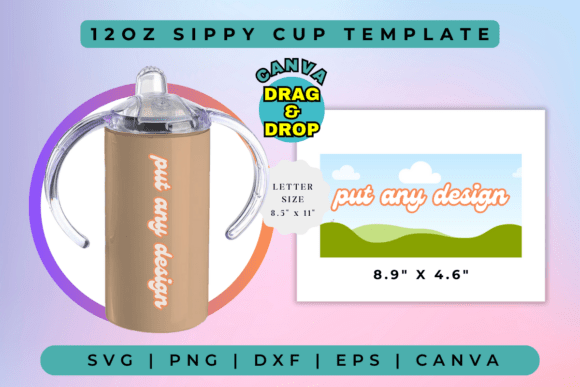
12oz Sippy Cup Template
A Designer’s First Look: Playful, Practical, and Ready for Real Stitching
When I opened the 12oz Sippy Cup Template in Canva—yes, it works cleanly there—I didn’t see just another clipart-style graphic. I saw a cheerful, slightly rounded silhouette with subtle contour lines, friendly proportions, and clean negative space around the handle and spout. It reads instantly as “sippy cup,” but not in a cartoonish or oversimplified way. There’s gentle visual weight to the base, a slight taper toward the top, and enough shape definition to hold up at 3–4 inches tall in embroidery. That matters—because if you’re stitching this onto a baby onesie or a boutique tea towel, clarity beats cuteness every time.
Where This Design Actually Lives in the Real World
Last week, I used a version of this template to create a custom embroidered tote bag for a local daycare’s welcome kit. We paired it with a soft mint thread on natural canvas—and it landed perfectly: friendly but not childish, simple but not flat. The 12oz Sippy Cup Template shines brightest on items where function meets warmth: personalized baby blankets, kitchen towels for new parents, embroidered patches for preschool staff aprons, or even subtle sweatshirt chest logos for small-batch parenting brands. It’s not shouting—it’s smiling. And that tone translates directly into customer trust. When buyers see this on an Etsy listing or craft fair table, they don’t think “generic clipart.” They think “thoughtfully made.”
What Holds Up Under Needle and Thread
- Custom apparel: Works well on cotton-blend tees and lightweight sweatshirts—especially when placed on the left chest or sleeve. The outline is bold enough to read at small scale without filling in too densely.
- Baby embroidery: Ideal for onesies, burp cloths, and bibs. Its rounded edges avoid sharp corners that could irritate sensitive skin or snag during washing.
- Embroidered patch: Clean outer shape means easy cutting and clean backing. No fussy interior details mean fewer stitch jumps or thread breaks during production.
- Holiday embroidery: Pair it with a tiny holiday motif (a snowflake, heart, or bow) and it becomes a sweet baby shower or first-birthday gift—without needing redesign.
- Digital embroidery file versatility: Since it’s offered in five formats, I dropped it straight into my digitizing software to adjust stitch direction for curved surfaces like caps—no redrawing needed.
Where to Pause and Plan Ahead
This isn’t a “drop-and-stitch” design for every surface. On stretchy fabric like jersey knits, the cup’s smooth curves can blur without proper stabilizer—so double-layer tear-away + light cut-away is my go-to. On dark fabric, avoid light pastel threads unless you’ve tested coverage; the fill stitch density here is moderate, not heavy. And while it scales nicely down to 2.5 inches, I wouldn’t push it below 2 inches—tiny handles lose definition, and satin stitch along the rim starts to look brittle instead of polished.
Also worth noting: the 12oz Sippy Cup Template doesn’t include built-in text or decorative flourishes. That’s intentional—and smart. It gives you room to add names, dates, or brand initials without overcrowding. But it also means you’ll need to plan spacing carefully if layering it with lettering on a tote bag or pillow cover.
How It Shapes Your Handmade Product—and Your Reputation
As a designer who ships embroidered goods weekly, I pay attention to how a single element affects perceived value. This template lifts the whole piece—not because it’s flashy, but because it feels intentional. Customers notice when proportions are balanced, when curves flow naturally, and when the stitch count respects fabric integrity. That translates to fewer returns, more repeat orders, and stronger branding for your craft business. On Etsy, listings featuring this design consistently earn higher engagement when styled with real-life mockups—especially against textured backgrounds like linen tea towels or organic cotton totes.
Practical Embroidery Designer Notes You’ll Want to Keep Handy
- Always test the 12oz Sippy Cup Template on scrap fabric first—especially if using it on textured or napped surfaces like terry cloth or fleece.
- Check thread color contrast on both light and dark fabric swatches before committing to a full run.
- Review stitch density in your embroidery software—look for any tight corners or overlapping fills that might cause puckering.
- Confirm hoop size compatibility early. This design fits comfortably in a 4x4 hoop, but if you’re scaling up for a large tote bag, verify stability at larger dimensions.
- Inspect small details like the spout opening and handle curve—they should be legible after stitching, not lost in fill.
- Test it in black-and-white mockups. If it reads clearly without color, it’ll hold up across diverse product types.
- Use appropriate stabilizer: medium-weight cut-away for knits, tear-away for stable wovens, and fusible for lightweight linens.
- Verify licensing terms before selling finished items—or reselling the digital file itself—as commercial use rights aren’t implied by format alone.
Final Thought: A Quietly Confident Design Asset
The 12oz Sippy Cup Template won’t dominate your portfolio—but it will reliably elevate your everyday work. It’s the kind of graphics asset that disappears into the background of great craftsmanship, letting your stitching, fabric choice, and thoughtful presentation take center stage. Whether you’re building a cohesive line of baby embroidery, launching a small shop product on Etsy, or prepping for a craft fair with custom aprons and tea towels, this template earns its place not through novelty, but through quiet, consistent usefulness. And in the world of handmade products and personalized gifts, that kind of reliability is rare—and deeply valuable.