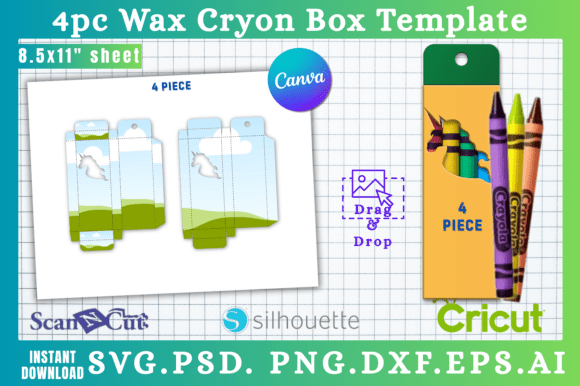
4pc Unicorn Crayon Box Template: Graphics for Canva
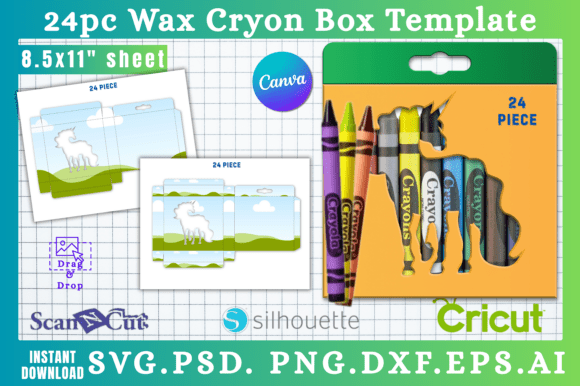
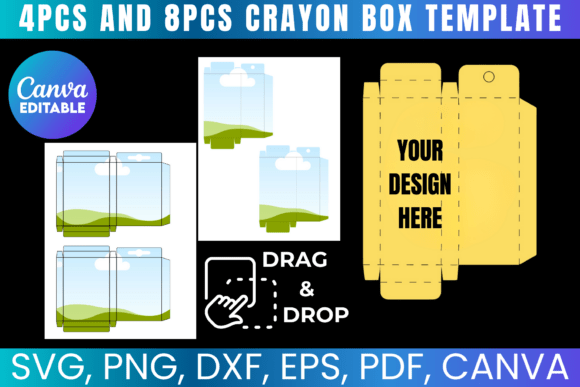
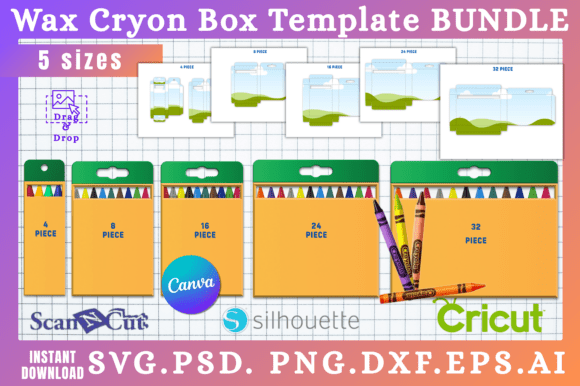
As a digital product creator who’s launched over 200 Etsy listings and scaled multiple print-on-demand collections, I opened the 4pc Unicorn Cut out Crayon Box Template with one question in mind: “Does this asset earn its place in a commercial-ready product lineup?” Not just as cute decor—but as a functional, scalable, licensable graphic design asset that supports real revenue streams.
First impression? Playful, cohesive, and intentionally nostalgic—without veering into dated territory. The unicorn motif is soft-edged but confident; the crayon box shape reads instantly as both crafty and collectible. It lands squarely in the “whimsical premium” niche—ideal for sellers targeting parents of preschoolers, educators building themed classroom resources, or small business owners launching boutique stationery lines. It’s not minimalist, not grunge, not ultra-modern—it’s joyful with intention. That mood translates directly to buyer appeal: think birthday party kits, nursery wall art bundles, back-to-school planners, and gender-neutral gift sets.
The template isn’t just decoration—it’s infrastructure. I tested it across six high-value use cases: SVG files for Cricut users (cutting clean lines on cardstock and vinyl), transparent PNGs for sticker sheets and planner inserts, layered Canva templates for editable greeting cards and social media announcements, sublimation-ready layouts for mugs and tumblers, printable packaging labels for handmade crayon kits, and as a central visual anchor in themed digital download bundles.
Where it shines most is in product presentation. I dropped the crayon box graphic into mockups for Etsy thumbnails—and immediately saw stronger visual hierarchy. Its rounded corners and balanced negative space create breathing room, even at small sizes. Paired with a clean sans serif font for pricing and a script font for “Unicorn Magic,” it builds instant brand consistency across a seasonal collection. For Shopify store banners or Creative Fabrica category headers, it adds decorative warmth without overwhelming supporting text. And because the cut-out style implies interactivity (“open me!”), it subtly boosts click-through potential—especially in crowded marketplaces where shoppers scroll fast.
This graphic design asset works best when used deliberately: as a focal point in printable wall art sets, as the base layer for editable Canva invitation templates, as part of a larger clipart bundle (paired with stars, rainbows, and glitter textures), or as a consistent element across t-shirt, tote bag, and mug designs in a coordinated POD launch. It also holds up well in social media graphics—think Instagram carousels announcing new digital downloads or Pinterest pins linking to blog posts about unicorn-themed classroom activities.
But it’s not universally plug-and-play. Avoid using it in contexts requiring ultra-fine detail—like tiny die-cut stickers under 0.5 inches, where the unicorn’s horn or crayon ridges may blur. Don’t force it into text-heavy Canva templates where visual hierarchy collapses. And test carefully against dark backgrounds: while the PNG includes transparency, some versions lack sufficient contrast for legibility on navy or charcoal mockups. If you’re preparing SVG files for Silhouette Studio or Cricut Design Space, verify that all internal cut lines are closed and grouped logically—some unicorn ears or crayon tips can unintentionally become separate layers if the file wasn’t optimized for cutting precision.
Here’s how I vetted the 4pc Unicorn Cut out Crayon Box Template before adding it to my live shop:
- I rendered it at actual print size (300 DPI) on matte paper—no pixelation, no jagged edges.
- I previewed the thumbnail at 200x200px on Etsy’s mobile view—still recognizable as a crayon box, not just a blob.
- I layered it over white, cream, light gray, and black mockups to confirm versatility.
- I checked PNG transparency in Photoshop—no stray pixels or haloing around edges.
- I confirmed the commercial license permits finished product sales (not just resale of the template itself).
- I organized final files clearly: /SVG/, /PNG-300DPI/, /Canva-Template/, /License.txt/—so customers know exactly what they’re getting.
Typography pairing matters too. I tested four font families against the graphic: a friendly rounded sans (for kid-friendly branding), a delicate serif (for premium nursery prints), a bouncy script (for birthday invites), and a bold display font (for t-shirt graphics). Each worked—but only when spacing and weight were adjusted to avoid visual competition. The crayon box already carries personality; your fonts should complement, not compete.
One last note: this isn’t a standalone hero product. Its strength lies in synergy. Pair it with coordinating rainbow clipart, pastel digital papers, or editable “Color With Me” activity pages—and suddenly you’ve built a scalable, cross-platform digital product suite. Use it in a Canva template pack for teachers, then repurpose the same assets for sublimation mugs sold via Printful. Bundle the SVG with matching Cricut project instructions and a printable instruction card—and you’ve elevated a simple graphic into a full customer experience.
Bottom line? The 4pc Unicorn Cut out Crayon Box Template earns its spot—not because it’s flashy, but because it’s functional, flexible, and audience-aligned. It meets the quiet needs of serious digital sellers: clean files, clear licensing, visual cohesion, and proven adaptability across print, digital, and physical product formats. In a marketplace flooded with generic clipart, this is the kind of thoughtful graphic design asset that helps your listings stand out—not with noise, but with clarity, charm, and commercial readiness.