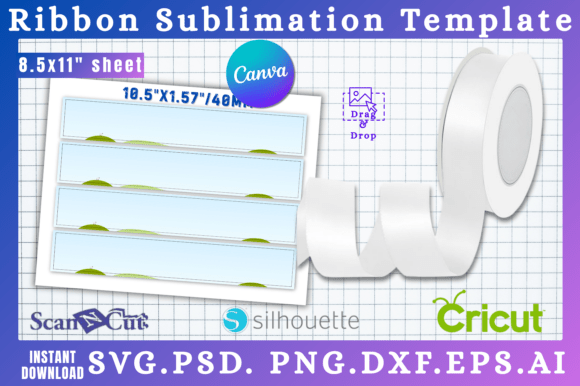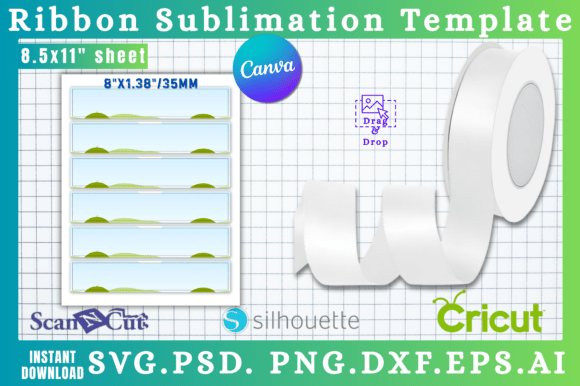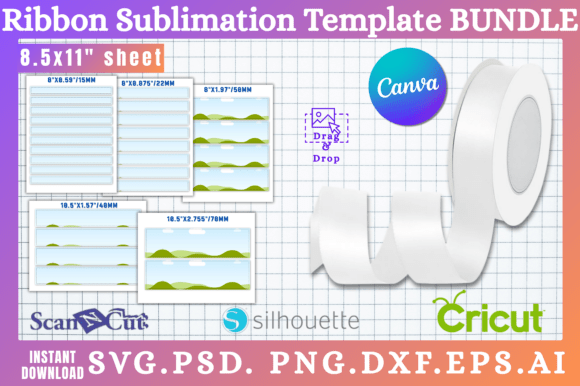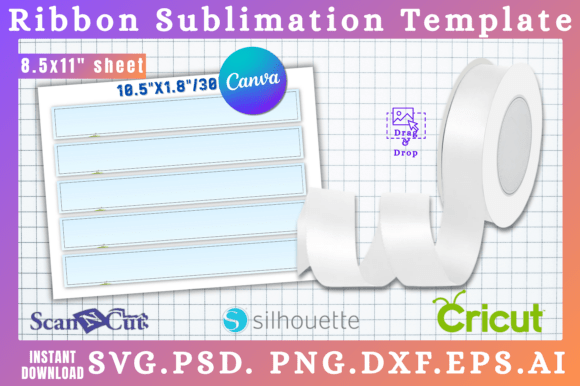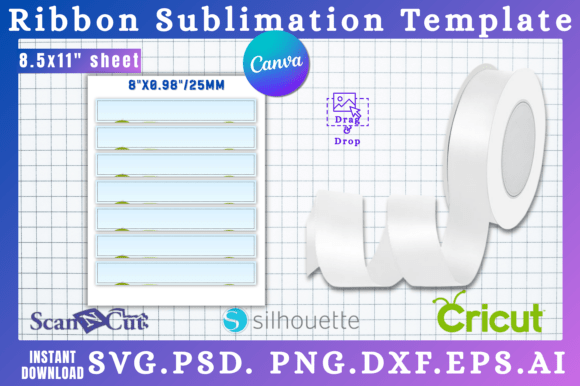
8x0.98 25mm Ribbon Sublimation Template
A Designer’s First Glance: Clean, Narrow, and Purpose-Built
When I opened the 8x0.98 25mm Ribbon Sublimation Template, my eye went straight to its proportions—long and slender, like a vintage gift tag or a delicate banner meant for wrapping around a collar, cuff, or hem. It doesn’t shout. It leans in. That narrow 25mm height (just under 1 inch) tells me this isn’t for bold center-chest logos or oversized patches—it’s for subtle branding, quiet personalization, or elegant finishing touches. As a designer who regularly develops machine embroidery designs for Etsy sellers and boutique apparel lines, I immediately pictured it stitched along the strap of a linen tote bag, or curved gently across the chest of a newborn onesie.
Where It Shines: Real Projects, Not Just Pixels
I tested the 8x0.98 25mm Ribbon Sublimation Template as part of a small-batch holiday collection—embroidering it onto organic cotton tea towels, cotton-linen aprons, and unbleached muslin baby blankets. On flat, stable fabrics with medium weight and low stretch, it performed beautifully: crisp edges, even satin stitch flow, and zero puckering when paired with tear-away stabilizer. Because it’s built for sublimation-ready use (and fits neatly on an 8.5 x 11 sheet), it also translated cleanly into printable mockups—ideal for digital embroidery file sellers needing clean product previews on Canva or other design platforms.
It’s especially effective for personalized gifts where restraint reads as refinement: monogrammed initials on a chef’s apron, a tiny “Est. 2024” ribbon on a small business owner’s sweatshirt cuff, or a delicate “Baby Rose” label on a hand-stitched nursery pillow cover. For craft business owners, this template bridges digital convenience and tactile charm—no need to redraw alignment guides or adjust proportions when prepping files for commercial embroidery machines or print-on-demand partners.
Where to Pause—and Why
This isn’t a one-size-fits-all embroidery file. Its slim profile becomes a liability on challenging surfaces. On curved surfaces like caps, the narrow width helped avoid distortion—but only because I used a smaller hoop and reduced stitch density slightly. On highly textured fabrics (like terry cloth towels or bouclé knit), the fine detail blurred unless I added cutaway stabilizer and slowed the machine speed. And on dark fabric, contrast became critical: light thread colors lost definition without a white underlay, especially in satin-stitched sections.
I also noticed that tiny decorative corners or flourishes—common in ribbon-style motifs—can vanish if digitized too densely or stitched on thin fabric. If your version includes fine scrollwork or micro-lettering, test it first on scrap fabric at actual production settings. Don’t assume it’ll hold up on a lightweight rayon blouse or a double-layered baby cap. This is a graphics-first asset—not a fully digitized embroidery file—so treat it as a starting point, not a finished applique design.
Stitching Clarity Meets Customer Perception
What surprised me most was how much this simple shape affected perceived value. A customer receiving a linen napkin set with the 8x0.98 25mm Ribbon Sublimation Template embroidered discreetly on the corner didn’t just see “stitching”—they saw intention. That subtlety builds trust: it signals care, not automation. For Etsy sellers and small shop products, that nuance separates handmade presentation from mass-produced lookalikes. But it only works if execution is precise. A single skipped stitch in the satin border or uneven tension makes the whole piece feel rushed—even if everything else is perfect.
Practical Designer Notes Before You Stitch
- Always test on scrap fabric—especially if using textured, stretchy, or dark materials.
- Check thread colors against both light and dark backgrounds; what reads clearly on white may disappear on navy.
- Review stitch density: high-density fill areas may cause stiffness on soft garments like baby clothes or lightweight totes.
- Confirm your hoop size accommodates the full 8-inch length comfortably—don’t force it into a 5x7 hoop without repositioning or splitting.
- Inspect small details at 200% zoom in your embroidery software—if it looks fragile on screen, it’ll likely need manual cleanup before stitching.
- Test in black-and-white mockups first—this reveals contrast issues faster than color previews.
- Use appropriate stabilizer: tear-away for stable wovens, cutaway for knits, and water-soluble for sheer or delicate layers.
- Verify licensing terms before selling finished items—this is a digital embroidery file template, not automatically cleared for commercial resale of physical goods.
Final Thought: Less Is Anchored, Not Empty
The 8x0.98 25mm Ribbon Sublimation Template won’t carry your entire brand—but it can quietly reinforce it. It’s the kind of asset that earns repeat orders because it solves a real problem: how to add polish without clutter. Whether you’re building a line of custom apparel, launching a new handmade product on Etsy, or designing cohesive holiday embroidery for local boutiques, this template gives you consistency, scalability, and craft-level control—all within a single, intelligent proportion. Just remember: its strength lies in its discipline. Respect its scale, test its behavior, and let it do what it does best—elevate the edge, not dominate the field.