Can Glass Template Bundle: Graphics for Canva Publishers
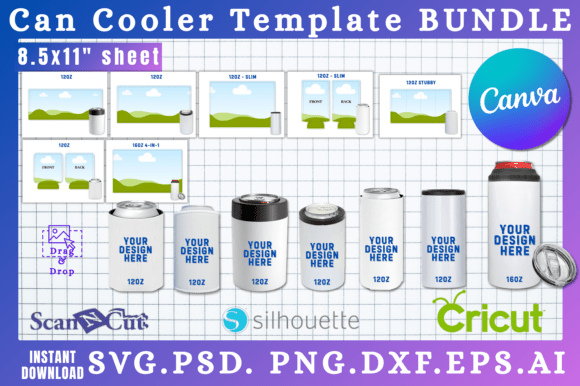
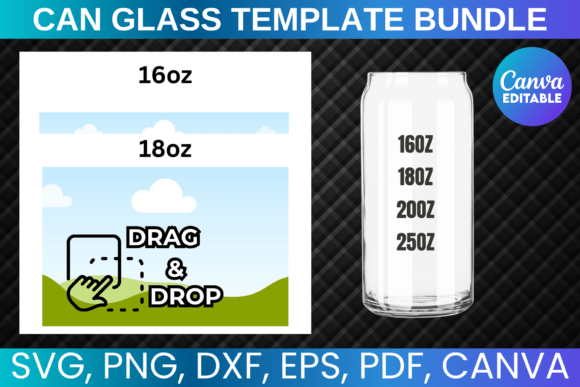
As a blog designer who’s built over 200 editorial websites and managed visual content for digital publishers across food, wellness, lifestyle, and small business niches, I approach every graphic design asset with two questions: *Does it elevate reader trust?* and *Does it survive real-world publishing conditions?* When I first opened the Can Glass Template Bundle — a set of precision-fit wrap templates for 16 oz, 18 oz, 20 oz, and 25 oz Libbey-style straight cans, delivered as layered SVG and high-res PNG files — my instinct was to drop it straight into an active content workflow. Not as a decorative experiment, but as a working editorial tool.
The immediate impression? Clean, modern, and quietly confident. These aren’t kitschy or overly stylized templates — they’re grounded in real product geometry, designed for clarity and customization. The mood leans toward lifestyle-meets-professional: warm enough for a wellness blogger’s seasonal lemonade guide, sharp enough for a small business owner launching a branded beverage line, and flexible enough for an online educator packaging a digital guide on sustainable packaging design. It avoids feeling overly feminine, seasonal, or playful — which makes it unusually versatile across niches where authenticity and polish matter more than trend-chasing.
In practice, the Can Glass Template Bundle shines where visual hierarchy meets intentionality. I used it last week to build Pinterest pins for a summer hydration series — wrapping clean typography and subtle botanical accents around the 20 oz template. The result wasn’t just “on-brand”; it created instant category recognition. Readers scrolling past instantly understood the content type (a practical, visually-led resource) and tone (thoughtful, accessible, aesthetically intentional). That’s editorial design at work: not decoration, but communication.
Here’s where this graphic design asset delivers measurable value in real publishing:
- Blog featured images — especially for recipe roundups, product spotlights, or seasonal content — gain dimension and tactile realism when anchored to a physical object like a glass can.
- Pinterest pins and social media graphics stand out in crowded feeds because the shape breaks predictable rectangular patterns while maintaining readability at thumbnail scale.
- Digital guides and lead magnets feel more valuable when presented as tangible, well-designed objects — the Can Glass Template Bundle helps turn abstract PDFs into perceived physical products.
- Newsletter headers and website banners benefit from its structural clarity: the vertical rhythm guides the eye naturally downward, supporting strong headline placement and CTA alignment.
- Downloadable printables and media kits gain credibility when paired with realistic product mockups — no stock photo dependency, no licensing friction.
What makes this bundle particularly effective for content marketing and affiliate marketing is its built-in contextual storytelling. A beverage brand affiliate post doesn’t just say “this tastes great” — it shows the drink in a format readers recognize from grocery shelves or cafes. That subtle realism builds trust faster than any testimonial. Similarly, for creative entrepreneurs selling Canva templates or digital downloads, using the Can Glass Template Bundle to showcase their own designs inside a real-world container adds instant legitimacy.
This graphic design asset works best in high-impact, high-visibility placements: hero sections, article thumbnails, Pinterest pin canvases (1000×1500 px), blog graphics with minimal text overlays, content upgrade visuals, and category archive banners. Its strength lies in simplicity — clean lines, consistent proportions, and smart file organization (SVG for scalability, PNG for quick drag-and-drop in Canva).
That said, use it thoughtfully in certain contexts. Avoid deploying it for mobile-first thumbnails under 300 px wide — the subtle details blur, and the shape loses definition. Steer clear in text-heavy blog graphics where legibility competes with form. And while it’s adaptable, it’s not neutral: it carries a distinct lifestyle-modern voice, so reserve it for niches where that tone aligns — not for corporate finance blogs, legal resource hubs, or ultra-minimalist SaaS sites requiring stark typographic purity.
Before committing to the Can Glass Template Bundle in your next campaign, run these publisher checks:
- Preview it inside your actual blog layout — does it hold contrast against your background color and body text?
- Test headline text placement across all four sizes — does your H2 stay legible on the 16 oz wrap at 72 dpi?
- View it beside serif, sans serif, script, and display fonts — does it harmonize or clash?
- Convert to grayscale — does the visual hierarchy survive without color cues?
- Check file size — compress PNGs without sacrificing edge clarity; SVGs should remain under 150 KB for fast-loading web use.
- Confirm commercial license terms — this is essential for monetized blogs, affiliate pages, and paid digital products.
For bloggers building authority, newsletter creators refining their visual identity, and small business owners scaling creative design in-house, the Can Glass Template Bundle isn’t just another Canva template. It’s a foundational design asset that bridges editorial intent and audience perception. When your digital guide looks like something worth holding, when your Pinterest pin feels like a product you’d pause for, and when your affiliate recommendation lands with quiet confidence — that’s the difference between good content and trusted content. And that’s why, after testing dozens of similar assets, this one stays open in my design library.