Memorial Keychain Template
A Designer’s First Look: Quiet, Respectful, and Ready for Real Stitching
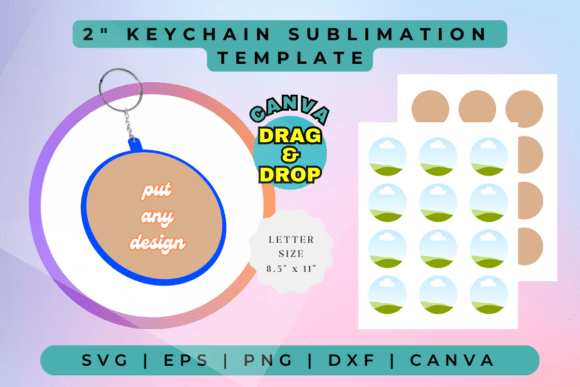
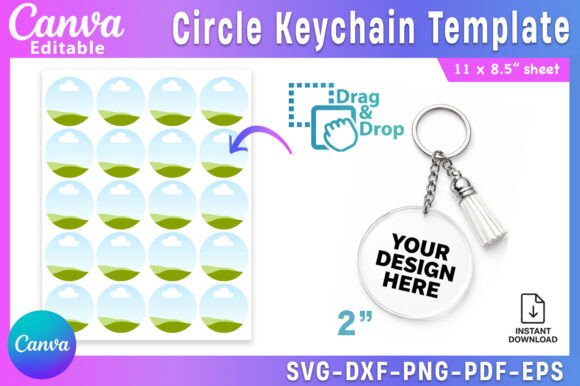
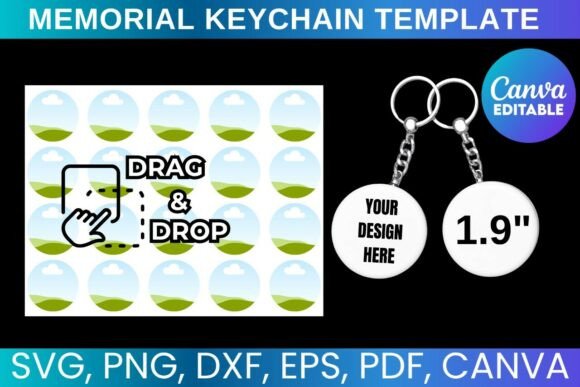
When I opened the Memorial Keychain Template, I didn’t see flashy graphics or trendy embellishments—I saw intention. The 1.9-inch circular format feels grounded, not cramped. It’s not trying to shout; it’s designed to hold space—literally and emotionally. As someone who regularly translates sentiment into stitch, I appreciate how this template balances simplicity with presence. The clean outer ring, subtle center area, and open layout invite personalization without competing with it. It doesn’t demand attention—it earns it through restraint. That matters deeply when you’re stitching something meant to comfort, honor, or remember.
Where This Template Actually Lives in the Real World
Last week, I used a version of the Memorial Keychain Template to create embroidered keepsake tags for a client’s boutique baby line—soft organic cotton onesies, tiny linen pillow covers, and hand-stitched tea towels for new parents. We laser-cut acrylic blanks from the SVG, then stitched names and birth dates directly onto them using a satin-stitched border and delicate fill-stitch lettering. Customers didn’t just buy a keychain—they bought a tactile memory. The circular shape made it easy to hoop consistently across fabric types, and the centered composition held up beautifully on curved surfaces like rolled pillow edges or tapered tote bag handles.
It also worked surprisingly well as a small-scale embroidered patch for a grief support nonprofit’s volunteer aprons. Because the Memorial Keychain Template avoids tight corners, dense clusters, or ultra-thin lines, it stitched cleanly on midweight twill—even with budget stabilizer. No puckering. No thread breaks. Just quiet clarity.
What Works—and Where to Pause Before You Stitch
The Memorial Keychain Template shines on stable, medium-weight fabrics: cotton canvas, linen blends, denim, and even structured knits like fleece-lined sweatshirts. Its moderate scale (1.9") gives enough real estate for readable lettering in satin stitch, while keeping detail legible at arm’s length. On a custom embroidered tote bag? Perfect. On a baby onesie hem? Still appropriate—if you simplify text to initials or a single date.
But here’s where judgment matters: avoid using the full template on highly textured fabrics (like bouclé or heavy terry) without testing first. Tiny inner details—especially if added later as personalized text—can blur. Same goes for stretchy fabrics (ribbed knits, jersey) unless you use cutaway stabilizer and reduce stitch density manually. And on dark fabric? Always preview your thread colors in grayscale mockups. A light gray satin stitch may vanish on charcoal; go bolder—navy, cream, or warm taupe—for contrast that reads as intentional, not faded.
I also wouldn’t push this template onto curved cap fronts or tightly seamed areas like gussets or sleeve cuffs. The circle is elegant—but not forgiving on compound curves. Save it for flat or gently rounded surfaces: keyring fobs, pillow centers, tote flaps, or framed nursery art panels.
Why This Template Builds Trust—Not Just Products
As an Etsy seller and embroidery designer, I know buyers don’t just shop for keychains—they shop for meaning. The Memorial Keychain Template supports that quietly. Its balanced proportions and uncluttered flow signal care—not haste. When stitched well, it looks handmade *and* professional. That duality builds trust: customers feel seen, not sold to.
For craft businesses, that translates to higher perceived value. A $24 embroidered keychain feels justified when the design breathes, aligns cleanly, and holds emotional weight without looking generic. And because it’s built as a blank template—not a finished graphic—it scales across branding: same layout, different fonts, thread palettes, or monogram styles. That consistency strengthens boutique identity across holiday gifts, wedding favors, or memorial service takeaways.
Practical Notes Every Embroiderer Should Check
- Test before committing: Stitch the Memorial Keychain Template on scrap fabric matching your final project’s weight and stretch.
- Review stitch density: If adding names or dates, check whether fill stitches overlap too heavily near the center—dense areas can stiffen delicate fabrics.
- Confirm hoop compatibility: At 1.9", it fits standard 4x4 hoops comfortably—but verify spacing if pairing with other elements (e.g., a border or secondary motif).
- Inspect small details: Zoom in on any included vector outlines—especially if importing into Canva or another graphics platform. What looks crisp on screen may need slight simplification for smooth satin stitching.
- Mock it both ways: Run black-and-white and color previews. Does the layout retain hierarchy on light *and* dark backgrounds? That tells you whether your thread choices will land.
- Stabilizer isn’t optional: Even with simple layouts, lightweight tear-away won’t cut it on knits or loosely woven linens. Use cutaway or hybrid for lasting integrity.
- Licensing matters: Since this is listed as a Graphics product in Canva, confirm whether commercial use—including selling finished embroidered items—is explicitly permitted. Don’t assume.
Final Thought: Design That Honors More Than Space
The Memorial Keychain Template isn’t about filling a circle—it’s about holding space with respect. It works because it leaves room: for memory, for meaning, for the quiet weight of what’s unsaid. As a machine embroidery design, it performs reliably. As a digital embroidery file, it invites thoughtful customization—not frantic editing. And as a craft business asset, it supports storytelling without overshadowing it.
If you’re choosing this for a client’s custom apparel, a holiday gift batch, or your own Etsy listing, treat it like what it is: a foundation—not a finish. Let your thread choices, fabric pairings, and finishing details do the speaking. The Memorial Keychain Template already knows when to stay still.