Tea Bag Tag Template: Canva Graphics for Handmade Brands
As a graphic designer who’s built brand identities for over a dozen tea-focused small businesses—from seasonal Etsy launches to local farmers’ market pop-ups—I opened Tea Bag Tag Template, Tea Bag Label Svg expecting either charming simplicity or generic clipart. What I found was a tightly curated, mood-forward graphic design asset that leans into warmth without sacrificing structure. It’s not just a label—it’s a tactile whisper of craft, nostalgia, and intentionality.
A First Impression That Sets the Tone
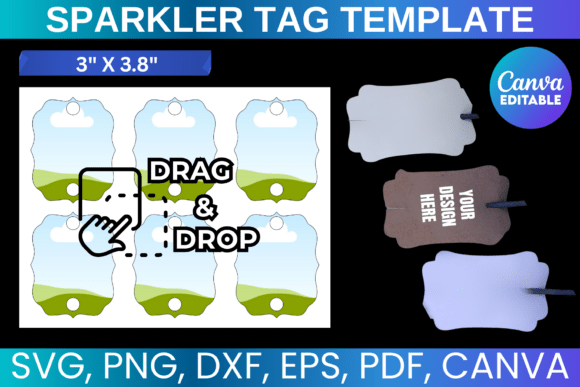
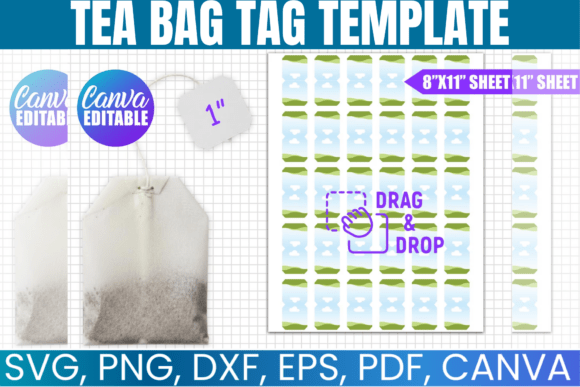
The moment you drop Tea Bag Tag Template, Tea Bag Label Svg into a Canva project, it reads as *handmade but professional*. The cutout shape suggests a die-cut paper tag—rounded corners, subtle notch detail, gentle curve at the top—while the clean vector lines ensure scalability. There’s no visual noise: no excessive ornamentation, no forced “vintage” distressing, no competing textures. Instead, it offers quiet confidence—a blank canvas that invites serif elegance or soft script, depending on your client’s voice. This makes it ideal for a real-world project like “Hearth & Leaf,” a new small-batch herbal tea line launching at a regional wellness fair. Their brand needs to feel grounded, botanical, and trustworthy—not trendy or fleeting.
Where It Shines in Real Client Work
Tea Bag Tag Template, Tea Bag Label Svg excels where authenticity meets execution: packaging design, product mockups, and social media graphics. When layered onto a linen-textured bag mockup, it elevates the entire presentation—no extra styling needed. As a Canva Editable asset, it adapts seamlessly to branded color palettes (I tested it with muted sage, terracotta, and cream), and its SVG format holds crispness from Instagram story size to 8×10 printable wall art.
- Packaging design: Perfect for tea box inserts, hang tags on reusable tins, or folded labels inside compostable pouches.
- Social media graphics: Works beautifully as a Pinterest pin overlay or Instagram post border—especially when paired with lifestyle photography of steam rising from a ceramic mug.
- Cricut projects: The clean vector paths cut precisely on vinyl or cardstock; I ran it through a test cut on kraft paper and got zero jagged edges.
- Print-on-demand: As a sublimation design or sticker design, it scales cleanly across mugs, tote bags, and tea towels without pixelation.
- Etsy product visuals: Use it consistently across listing banners, digital download previews, and thank-you cards to reinforce brand identity.
Where to Proceed With Intention
This isn’t a universal solution—and that’s its strength. Tea Bag Tag Template, Tea Bag Label Svg should be used carefully in minimalist corporate branding, ultra-modern tech-adjacent campaigns, or any context demanding stark neutrality. Its gentle shape and implied tactility don’t translate well to small sizes (under 1.5 inches wide) without losing definition. On busy backgrounds—like floral patterned wrapping paper or grainy photo overlays—it can visually recede unless given a subtle drop shadow or solid backing shape. And while it pairs elegantly with serif fonts (think Playfair Display or Cormorant Garamond), it clashes with aggressive sans-serifs (e.g., Montserrat Black) or rigid display fonts unless deliberately contrasted for editorial effect.
What It Does for Brand Trust and Emotional Appeal
In client work, perception is outcome. A well-placed Tea Bag Tag Template, Tea Bag Label Svg signals care—not just in the product, but in the presentation. It supports visual hierarchy by anchoring attention to key information (blend name, origin, brewing notes) without shouting. For handmade business owners, that nuance builds instant credibility: it says “I value craft down to the tag.” Emotionally, it evokes calm, ritual, and slowness—qualities increasingly rare (and valuable) in digital-first markets. When used across touchpoints—email headers, blog sidebars, printed recipe cards—it reinforces recognition and strengthens recall far more effectively than a standalone logo alone.
Designer Notes You Can’t Skip
Before locking it into a client deliverable, run these checks:
- Test it in black and white—does the shape retain legibility? (It does, but avoid thin font weights inside.)
- Preview on both light and dark backgrounds—check contrast ratios for accessibility compliance.
- Scale it down to 0.75” width: does the notch detail vanish? (Slight loss, but acceptable for physical tags.)
- Drop it onto 3 real product mockups—preferably matte, textured, and glossy surfaces—to assess how lighting affects depth.
- Print a sample at 300 DPI on uncoated stock: verify edge sharpness and ink bleed behavior.
- Inspect the SVG file in Illustrator—confirm all paths are closed and grouped logically for easy editing.
- Compare font pairings: it sings with serif and script, holds its own with rounded sans-serifs (like Quicksand), but fights with geometric fonts (like Poppins).
- Verify commercial license terms—this is a commercial design asset, but always confirm usage scope (e.g., unlimited end products vs. limited print runs).
Final Verdict: A Thoughtful Asset, Not a Shortcut
Tea Bag Tag Template, Tea Bag Label Svg isn’t flashy—but it doesn’t need to be. In a landscape saturated with overdesigned, algorithm-chasing templates, it stands out by doing one thing exceptionally well: supporting human-centered storytelling. It fits naturally into editorial design for wellness blogs, adds warmth to web design headers, and gives print-on-demand sellers a cohesive anchor for themed collections. For designers building real brand identities—not just one-off graphics—it’s less of a “template” and more of a thoughtful, reusable element in a larger creative system. Used with intention, it becomes part of the client’s visual language—not just decoration. That’s why, for my next herbal tea launch, this will be the first asset I place on the artboard.